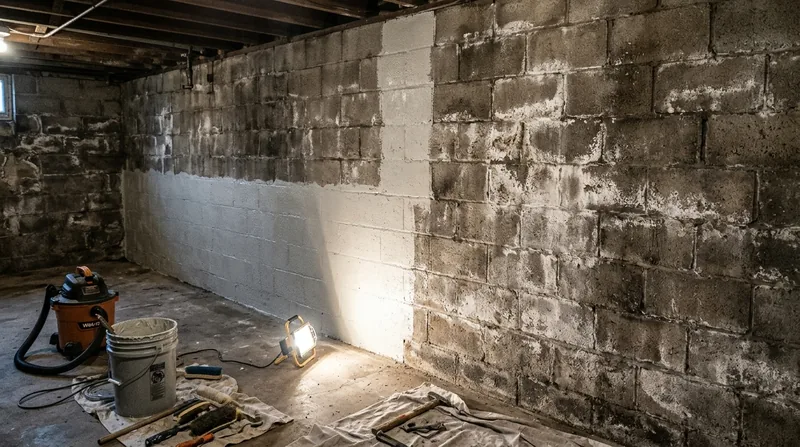




Basement Wall Sealing in Champaign: Stop the Damp Before It Spreads
If your basement walls sweat through the summer or show white powder along the block joints, you need Basement Wall Sealing in Champaign done by someone who understands prairie water tables, not a general handyman with a bucket of paint. Champaign sits on flat glacial till and silty loam that drains slowly, and the water table rides high every spring. The Old West Side, Garden Hills, and Douglass Square are full of 1900s to 1930s bungalows and foursquares with cut stone, brick, or early block foundations that have been wicking moisture for a century. South and east side ranches from the 1950s through 1970s often have partly finished basements where seepage ruins drywall and carpet. We prep the wall, remove efflorescence, and apply the right sealer for your wall type. We also tell you straight when sealing is not enough and hydrostatic pressure is the real problem. Call (217) 863-1605 to schedule a free basement inspection, or read our basement waterproofing service page for the full picture.
Why Champaign Basements Leak and Why Wall Sealing Matters Here
Champaign's flat terrain and slow-draining silty loam keep groundwater close to the footing, and Boneyard Creek rises fast during summer cloudbursts. Snowmelt and freeze-thaw cycles crack old mortar joints and open hairline fissures in early block walls. That is why we see so much efflorescence and wall seepage in the older neighborhoods, and why a sealer that breathes correctly matters. The wrong coating traps moisture and spalls the face of the block.
- We remove efflorescence and loose parging before any sealer touches the wall.
- We identify whether dampness comes from surface condensation or actual water migration through the wall.
- We match penetrating sealers to porous block and membrane sealers to cracked or previously coated walls.
- We flag active hydrostatic pressure so you do not waste money sealing a wall that needs drainage.
Sealing is the right first step for minor dampness, but it will not hold back a rising water table on its own.
Key info: A 1920s foursquare off West Church Street in Champaign had chalky white efflorescence across the whole south wall every March. The owner had already painted it twice. We stripped the coating, treated the wall, and applied a breathable penetrating sealer. The wall stayed dry through the next spring melt, but we also recommended extending the downspouts because the grading was dumping water against the foundation.
For official guidance on moisture and foundation maintenance, the City of Champaign publishes local building and property maintenance information worth reviewing before you schedule work.
How We Seal Basement Walls in Champaign Homes
Every job starts with a walkthrough of the basement and the exterior grade. We check the wall material, look for crack patterns, test for active seepage, and inspect the footing drain and sump basin if one exists. In older Champaign homes, we often find the original weeping tile clogged with roots and silt, which changes the recommendation entirely. We do not sell sealer as a cure for a drainage problem.
- We inspect the wall and document crack locations, efflorescence, and any bowing or movement.
- We wire-brush and scrape loose material, then treat efflorescence with a proper cleaner.
- We fill non-structural cracks with hydraulic cement or epoxy injection before sealing.
- We apply a penetrating sealer on porous block or a flexible membrane on walls that need bridging.
- We correct grading and downspout extensions so water moves away from the wall.
- We leave you with a written summary of what we sealed and what still needs monitoring.
If the inspection shows a wet basement driven by hydrostatic pressure, we will point you toward an interior drain tile system instead of taking your money for a sealer that cannot hold.
Key info: A split-level in Bristol Park had damp walls only along the uphill side. The sealer alone would have failed, because the downspouts discharged right at the corner and the grade sloped back to the house. We sealed the wall, added downspout extensions, and regraded that section. Two seasons later the wall is still dry.
Sealing Approaches We Use on Champaign Walls
Not every wall takes the same product. Cut stone, brick, and early block behave differently, and a wall that has been painted before needs different prep than a bare one. Here is how we match the approach to the wall.
| Approach | Description | Best for |
|---|---|---|
| Penetrating sealer | Soaks into the masonry and blocks liquid water while letting vapor escape. | Bare block and brick walls with mild dampness and efflorescence. |
| Membrane sealer | Forms a flexible film that bridges hairline cracks and resists minor movement. | Walls with fine shrinkage cracks and previous coating failures. |
| Crack injection plus seal | Epoxy or polyurethane injection fills the crack, then we seal the surrounding wall. | Visible vertical or diagonal cracks with active seepage. |
| Parging repair and seal | We rebuild failed parging and then apply the appropriate sealer over the repair. | Older Champaign stone and brick walls with crumbling mortar coats. |
| Drainage evaluation | We check footing drain and sump performance before recommending any sealer. | Walls that stay wet despite prior sealing attempts. |
The right approach depends on what the wall is made of and how the water is getting in, not on what is easiest to apply.
Basement Wall Sealing Cost in Champaign: What to Expect
Most basement wall sealing jobs in Champaign start around $1,500, and that figure covers a typical single-wall or partial-basement sealing with proper prep. A full basement with heavy efflorescence, failed parging, or cracks that need injection will run higher. Access matters too: a finished basement with paneling and storage tight to the wall takes longer to protect and work around. We quote after the inspection, never over the phone, because the wall tells the story.
Getting two or three estimates is smart in this market. Ask each contractor what prep they include, what sealer they use, and whether they checked the footing drain. A low bid that skips efflorescence removal is not a bargain. Our pricing page lays out the ranges so you can compare apples to apples.
Basement Wall Sealing Near Me: How to Choose a Contractor Near Champaign
You will find plenty of names when you search for basement wall sealing near me, and not all of them specialize in below-grade work. Ask for proof of licensing and insurance before anyone starts, and get a certificate of insurance sent to you directly. Ask how many basements they have sealed in Champaign County and whether they have worked on cut stone or early block walls. Check references from homeowners in older neighborhoods where the foundation challenges are real. If the work involves structural repair or altered drainage, confirm who pulls the permit with the local building department, because rules vary by jurisdiction.
Reach out through our contact page to set up your free inspection.
Basement Wall Sealing in Champaign: Pricing Guide
| Service | Price | Details |
|---|---|---|
| Single wall sealing with prep | Starting at $1,500 | Includes efflorescence removal, crack prep, and one coat of penetrating sealer on a typical wall. |
| Full basement wall sealing | Starting at $2,400 | Covers all accessible walls, heavier prep, and membrane sealer where cracks need bridging. |
| Crack injection plus sealing | Starting at $1,900 | Epoxy or polyurethane injection for active cracks before the wall is sealed and finished. |
| Parging repair and seal | On estimate | Crumbling parging on older stone or brick walls needs an on-site look before pricing. |
| Travel | Included | In Champaign and surrounding areas, no separate call-out or mileage fee. |
| Estimate | Free | Response within 24h at (217) 863-1605, no obligation to book. |
Indicative pricing, the exact cost depends on square footage, finish, and site access. Free personalized estimate within 24h at (217) 863-1605.


