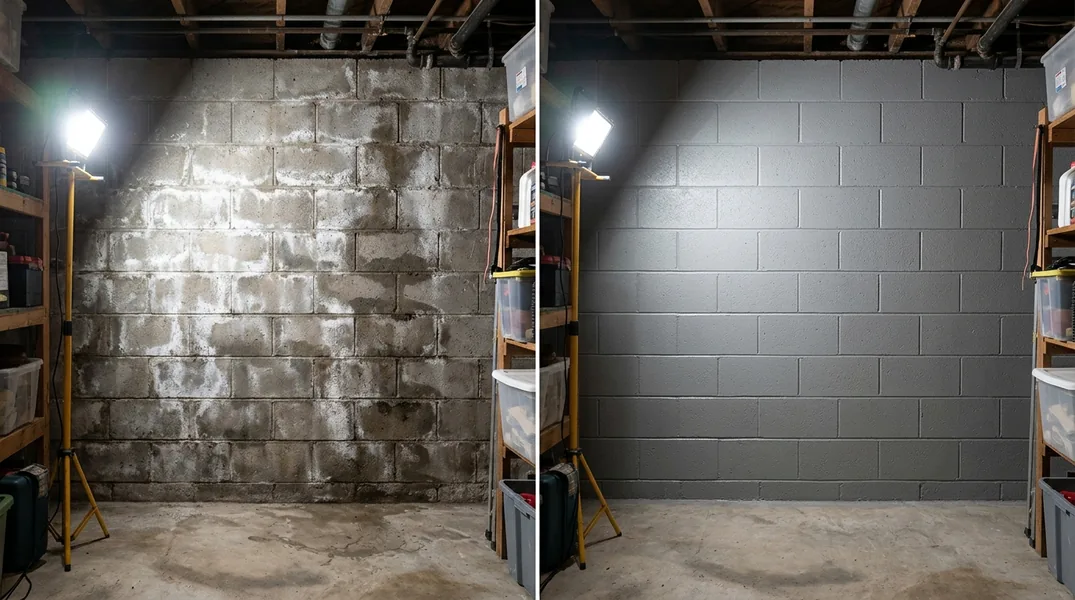
The Ground Beneath Your Home: Prairie Clay and Basement Leaks in Champaign
If you live in Champaign, you already know that the landscape is famously flat. What you may not know is that the soil under that flat surface is a major reason why so many basements in the area struggle with water. The region sits on what geologists call prairie clay, a dense, sticky soil that was deposited across central Illinois thousands of years ago. Unlike sandy or gravelly soils that let water drain away quickly, prairie clay acts more like a sponge that never quite wrings out. It absorbs moisture slowly and releases it even more slowly, which means water lingers against your foundation long after a storm has passed.
That lingering moisture is the root of many Champaign basement leaks. When clay soil becomes saturated, it expands. When it dries out, it shrinks and cracks. This constant cycle of swelling and shrinking puts pressure on foundation walls and creates gaps where water can find its way inside. Over time, even a well-built foundation can develop hairline cracks, and those cracks become pathways for water. Understanding this soil behavior is the first step toward solving the problem, because it explains why a simple surface fix rarely lasts in this part of Illinois.
Why a High Water Table Makes Illinois Soil and Basement Water a Year-Round Concern
Champaign sits in an area where the water table is often surprisingly close to the surface. During wet seasons, and especially after the heavy spring rains that central Illinois is known for, that water table can rise high enough to press against the underside of your basement floor. This is different from the water that runs down your walls from rain. Groundwater from a high water table seeps up from below, which means it can appear as damp spots on the floor, white powdery deposits along the base of walls, or even standing water after a prolonged wet spell. Homeowners often mistake this for a plumbing leak, but the source is the ground itself.
The combination of prairie clay and a high water table is what makes Illinois soil and basement water such a persistent issue. Clay slows drainage from above while groundwater pushes from below, leaving your basement caught in the middle. This is why some Champaign basements feel damp even when it has not rained in days. The soil is still holding moisture, and the water table is still doing its slow work. Addressing only one side of the equation, either surface water or groundwater, usually leaves the other problem free to continue.
Common Champaign Basement Leak Causes You Can Spot Yourself
While the soil and water table set the stage, there are specific, visible causes of Champaign basement leak causes that homeowners can identify on their own. The most common is a failed or missing exterior drainage system. Many older homes in Champaign were built before modern waterproofing standards, and their footing drains may be clogged, collapsed, or simply not present. When downspouts discharge water too close to the foundation, that water pools against the wall and seeps through cracks or porous concrete. Grading is another frequent culprit: if the ground slopes toward the house instead of away, every rainstorm sends water directly to your foundation.
Inside the basement, look for efflorescence, the white chalky residue that indicates water is moving through the concrete. Check for rust stains near the floor, which often point to moisture wicking up from below. Small cracks in the floor or walls, damp carpet edges, and a musty smell are all signs that water is finding a way in. None of these issues resolve on their own, and in fact they tend to worsen as the clay continues its cycle of expansion and contraction. If you notice any of these signs, it is worth having a professional evaluate the situation before the next wet season arrives.
Basement Waterproofing Near Me: When to Call a Pro in Champaign
Some homeowners try to manage basement moisture with a dehumidifier or a fresh coat of paint on the walls. These measures can help temporarily, but they do not address the underlying cause. When you see water entering consistently, when cracks are widening, or when the musty smell returns every spring, it is time to call a professional. A proper assessment looks at the whole picture: the soil, the water table, the exterior drainage, and the condition of the foundation. That is the kind of evaluation you get when you request a free estimate from a local specialist who understands Champaign soil conditions.
Professional Basement Waterproofing in this region typically involves a combination of strategies rather than a single fix. An Interior Drain Tile System can capture groundwater that rises beneath the floor and redirect it to a sump pump, keeping the basement dry even when the water table is high. On the exterior, Exterior Basement Waterproofing addresses the water before it ever reaches the wall by improving drainage and sealing the foundation from the outside. In many cases, both approaches are used together for the best long-term results. A thorough Foundation Waterproofing plan also includes crack repair and proper grading to move surface water away from the home.
Basement Waterproofing Cost in Champaign: What to Budget
Homeowners often ask what waterproofing will cost, and the honest answer is that it depends on the extent of the problem and the approach required. A minor crack repair is far less expensive than a full interior drain tile installation, and an exterior system involves different labor and materials. Factors that influence pricing include the size of your basement, the severity of water intrusion, whether a sump pump is needed, and how accessible the exterior foundation is. Because prairie clay and a high water table affect homes differently from block to block, a one-size-fits-all price does not exist. The best way to understand your specific situation is to have a professional inspect your basement and provide a written estimate.
It also helps to think of waterproofing as a long-term investment rather than a one-time repair. Water damage can undermine your foundation, ruin finished basement space, and create mold problems that affect indoor air quality. Addressing the issue proactively usually costs less than repairing the damage after years of neglect. If you are in Urbana, Savoy, or Bondville, the same soil and water table conditions apply, so the guidance is consistent across the region. Call Champaign Waterproofing at (217) 863-1605 to discuss your basement and get a clear picture of what a lasting solution would involve.
Looking for a professional basement waterproofing contractor in Champaign? Champaign Waterproofing responds fast for all your basement waterproofing needs.
Get a Free QuoteOur services: Basement Waterproofing · Interior Drain Tile System · Exterior Basement Waterproofing