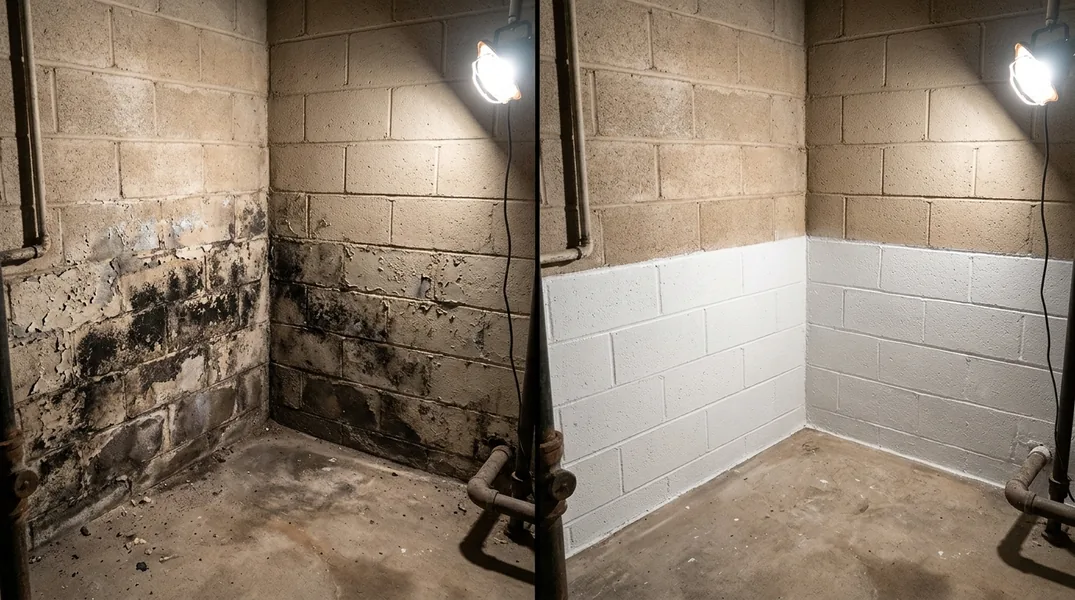
Why Champaign-Urbana Basements Face Unique Water Challenges
If you own a home in Champaign, you already know that our region's soil is anything but ordinary. The thick, heavy prairie clay that underlies much of East Central Illinois behaves like a sponge during wet seasons and like cracked concrete during dry spells. That constant expansion and contraction puts relentless pressure on foundation walls, and when combined with our freeze-thaw cycles, it creates ideal conditions for basement leaks.
Many homes in Urbana and the surrounding communities were built decades ago, often with minimal waterproofing by today's standards. Homeowners frequently notice dampness along the cove joint, white powdery efflorescence on block walls, or water pooling after a heavy spring storm. Understanding why water is entering is the first step toward choosing the right solution. That is where the interior vs exterior waterproofing decision comes in.
How Interior Drain Tile Systems Work
An Interior Drain Tile System is installed along the inside perimeter of your basement footing. The crew breaks out a narrow strip of concrete floor, digs a trench, and lays perforated pipe that channels incoming water to a sump pit. A sump pump then discharges the water away from the home. The system is typically finished with a vapor barrier and new concrete, keeping your floor clean and your basement dry.
The biggest advantage of interior waterproofing is that it works regardless of weather and does not require excavating your yard, decks, or landscaping. It also addresses hydrostatic pressure directly at the point where water enters. For many Champaign homeowners dealing with prairie clay basement leaks, an interior system is the most practical and cost-effective path to a dry basement. If you are comparing drain tile vs exterior membrane options, interior drain tile often wins on accessibility and long-term reliability.
How Exterior Basement Waterproofing Works
Exterior Basement Waterproofing takes the opposite approach. It involves excavating down to the footing, applying a waterproof membrane to the exterior foundation wall, installing drainage board or gravel, and often adding exterior drain tile. This method stops water before it ever reaches your basement wall, which can be appealing if you want to protect the structure itself from soil pressure and moisture intrusion.
However, exterior work is more invasive and typically more expensive. Landscaping, sidewalks, and porches may need to be removed and restored. In some cases, exterior waterproofing is the right call, especially when foundation walls are damaged or when a home is being built or extensively renovated. For most existing homes in the Savoy and Bondville areas, though, interior systems offer a better balance of results and disruption.
Interior vs Exterior Waterproofing: A Side-by-Side Comparison
When homeowners ask us to compare interior vs exterior waterproofing, we focus on three factors: effectiveness, disruption, and long-term value. Interior systems manage water at the point of entry and are highly effective for the hydrostatic pressure common in prairie clay soils. They require no exterior excavation, so your yard and hardscaping stay intact. Exterior systems block water at the source but come with significant excavation costs and restoration work.
From a pricing standpoint, interior drain tile is usually more affordable for existing homes, while exterior membrane systems can cost considerably more because of the labor and restoration involved. Neither option is universally better. The right choice depends on your foundation type, the severity of the leak, and your budget. A professional assessment is the only way to know for sure which approach fits your property.
Basement Waterproofing Cost in Champaign: What to Budget
Homeowners researching basement waterproofing cost in Champaign should expect a range rather than a single number. Interior drain tile systems typically cost less than exterior excavation because they do not require digging up your yard. Exterior membrane systems carry higher labor and restoration costs. Factors like basement size, foundation condition, sump pump requirements, and accessibility all influence the final quote.
We recommend getting a detailed written free estimate rather than relying on national averages. Local soil conditions and home age matter enormously in Central Illinois. A reputable contractor will inspect your basement, explain the source of the water, and present options that fit your situation. Call Champaign Waterproofing at (217) 863-1605 to schedule an assessment and get transparent pricing for your home.
Basement Waterproofing Near Me: When to Call a Pro
If you are searching for basement waterproofing near me in the Champaign area, you are probably noticing signs that need attention: musty odors, water stains, cracked walls, or a sump pump that runs constantly. Ignoring these issues allows water damage to spread, potentially compromising your foundation and indoor air quality. Prairie clay does not stop exerting pressure just because the rain stops.
A professional evaluation will determine whether an interior drain tile system, exterior membrane, or a combination of Foundation Waterproofing strategies is right for your home. At Champaign Waterproofing, we serve homeowners throughout Champaign and the surrounding communities with honest assessments and durable solutions. Reach out today at (217) 863-1605 or request a free estimate online to protect your basement before the next heavy rain.
Looking for a professional basement waterproofing contractor in Champaign? Champaign Waterproofing responds fast for all your basement waterproofing needs.
Get a Free QuoteOur services: Basement Waterproofing · Interior Drain Tile System · Exterior Basement Waterproofing