Why Spring Rains Put Your Sump Pump to the Test on the Illinois Prairie
Spring on the Illinois Prairie brings a familiar rhythm: warming temperatures, blooming redbuds, and, unfortunately, heavy, persistent rain. For homeowners in Champaign, those spring storms can dump inches of water in a matter of hours, and all of that moisture has to go somewhere. The flat prairie landscape and often clay-heavy soils mean water drains slowly, pooling around foundations and seeping into basements. That is where your sump pump comes in. It is the hardest-working appliance in your basement, and it usually sits idle for months before being called into action. When the spring rains arrive, you need it to work flawlessly.
Think of your sump pump as the first line of defense against a flooded basement. When groundwater rises and enters the sump pit, the pump kicks on and moves that water away from your home. But like any mechanical system, it needs regular attention to perform when it matters most. A pump that has sat unused since last spring may have a stuck float, a clogged intake, or a dead battery in its backup system. A few simple maintenance steps now can save you thousands of dollars in water damage and stress later. In this article, we will walk through the key tasks every homeowner should complete before the spring storm season hits.
Sump Pump Maintenance Checklist for Champaign Homeowners
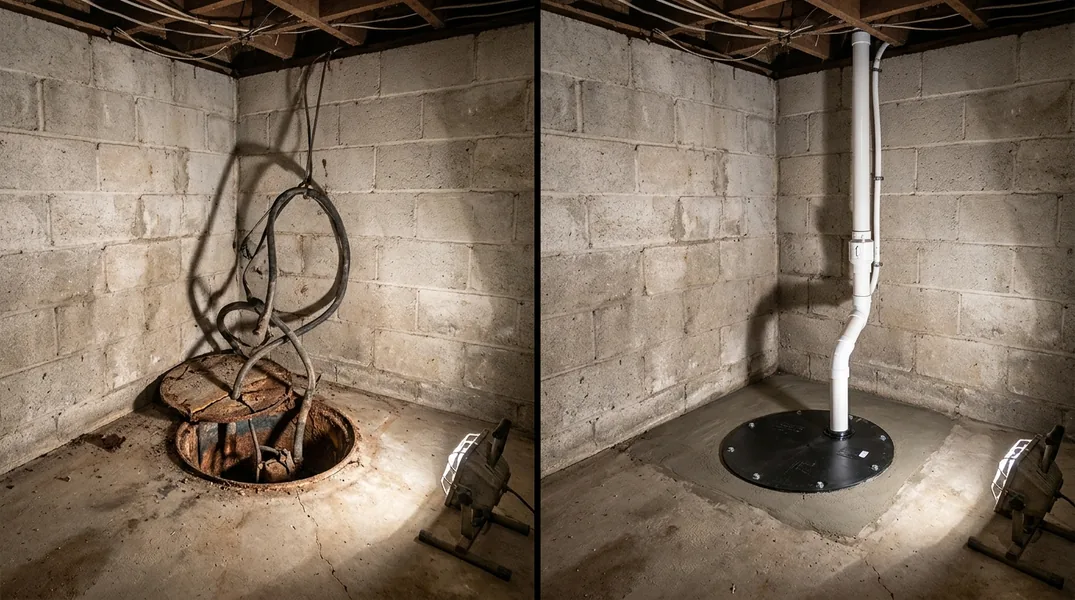
Before the first big rain, set aside an hour to give your sump pump a thorough checkup. Start by inspecting the pump itself. Remove the cover from the sump pit and look for debris, silt, or gravel that may have accumulated. Clean out any obstructions and make sure the pump stands upright and is not tilted. Check the power cord for frayed wires or loose connections, and confirm the pump is plugged into a working GFCI outlet. Next, test the pump by pouring a bucket of water into the pit. The float should rise and trigger the pump, which should start moving water out quickly. If the pump does not turn on, or if it runs but does not move water, you may have a problem that needs professional attention.
Do not forget the discharge line. This is the pipe that carries water away from your foundation. Check for leaks, clogs, or disconnected sections. The discharge line should direct water several feet away from the house, ideally to a spot where it can drain without flowing back toward the foundation. If your line ends too close to the house, extend it. Also, make sure the line is not buried under snow or debris and that it slopes downward so water does not freeze or pool inside. A frozen or blocked discharge line is one of the most common reasons sump pumps fail during early spring storms. For homeowners who want a more comprehensive solution, Basement Waterproofing services can evaluate your entire drainage system and recommend improvements.
The Sump Pump Check Valve: A Small Part with a Big Job
One component that often gets overlooked during maintenance is the sump pump check valve. This small, one-way valve is installed on the discharge line and allows water to flow out of the pit but prevents it from flowing back in. Without a functioning check valve, water that has just been pumped out can drain right back into the pit, causing the pump to cycle repeatedly. This short-cycling not only wears out the pump faster but also wastes energy and can leave your basement vulnerable during a heavy storm. If your pump runs frequently even when there is no rain, a faulty check valve is a likely culprit.
Inspecting the check valve is straightforward. Locate it on the discharge pipe, usually just above the pump. Look for signs of leaks, corrosion, or mineral buildup. If the valve is more than a few years old or if you hear banging or gurgling sounds when the pump shuts off, it may be time to replace it. A new check valve is inexpensive and easy to install, and it can significantly extend the life of your pump. While you are at it, consider adding a second check valve if your discharge line is long or if you have a backup pump. This provides an extra layer of protection against backflow. If you are unsure about the condition of your check valve, a professional can inspect it during a routine maintenance visit.
Battery Backup Sump Pump: Your Safety Net During Spring Storms
Spring storms on the prairie often come with power outages. A severe thunderstorm or tornado warning can knock out electricity for hours, and that is exactly when your sump pump is needed most. A battery backup sump pump is a secondary pump that runs on a charged battery when the primary pump loses power or fails. It is an essential investment for any homeowner who wants peace of mind during storm season. If you do not have a backup system, consider installing one before the rains begin. If you already have one, maintenance is just as important as for your primary pump.
Test your battery backup system by unplugging the primary pump and pouring water into the pit. The backup pump should activate and pump water out. Check the battery terminals for corrosion and clean them if necessary. Most backup batteries need to be replaced every three to five years, so check the age of yours. Many modern systems have a battery indicator light or alarm that alerts you when the battery is failing. Do not ignore these warnings. A dead backup battery is just as useless as no backup at all. For homeowners in Urbana and surrounding areas, a professional can help you choose the right backup system for your home and ensure it is installed correctly.
Storm Basement Flooding: When to Call a Professional Near Me
Even with diligent maintenance, some basements are more prone to flooding than others. If you have experienced storm basement flooding in the past, or if your sump pump runs constantly during heavy rain, it may be a sign of a larger drainage issue. Poor grading, clogged gutters, or a lack of interior drainage can overwhelm even a well-maintained pump. In these cases, a professional assessment is the best way to identify the root cause and implement a lasting solution. Services like an Interior Drain Tile System can capture water before it reaches your sump pit, reducing the burden on your pump and providing a more reliable defense against spring storms.
If you are searching for "sump pump maintenance near me" or need expert help with storm basement flooding, Champaign Waterproofing is here to assist. Our team serves Savoy, Bondville, and the greater Champaign area. We can inspect your sump pump, check the check valve, test your battery backup, and recommend any necessary repairs or upgrades. Do not wait for the first storm to discover a problem. Call us at (217) 863-1605 or request a free estimate today. We also offer transparent pricing so you know exactly what to expect. Protect your basement and your peace of mind before the spring rains arrive.
Looking for a professional basement waterproofing contractor in Champaign? Champaign Waterproofing responds fast for all your basement waterproofing needs.
Get a Free QuoteOur services: Basement Waterproofing · Interior Drain Tile System · Exterior Basement Waterproofing